How to Lower Blood Pressure Naturally, and by How Much
Eating well, cutting salt, moving more and losing extra weight each lower your blood pressure, and together they add up. Here is what each change does and how to see it in your own readings.
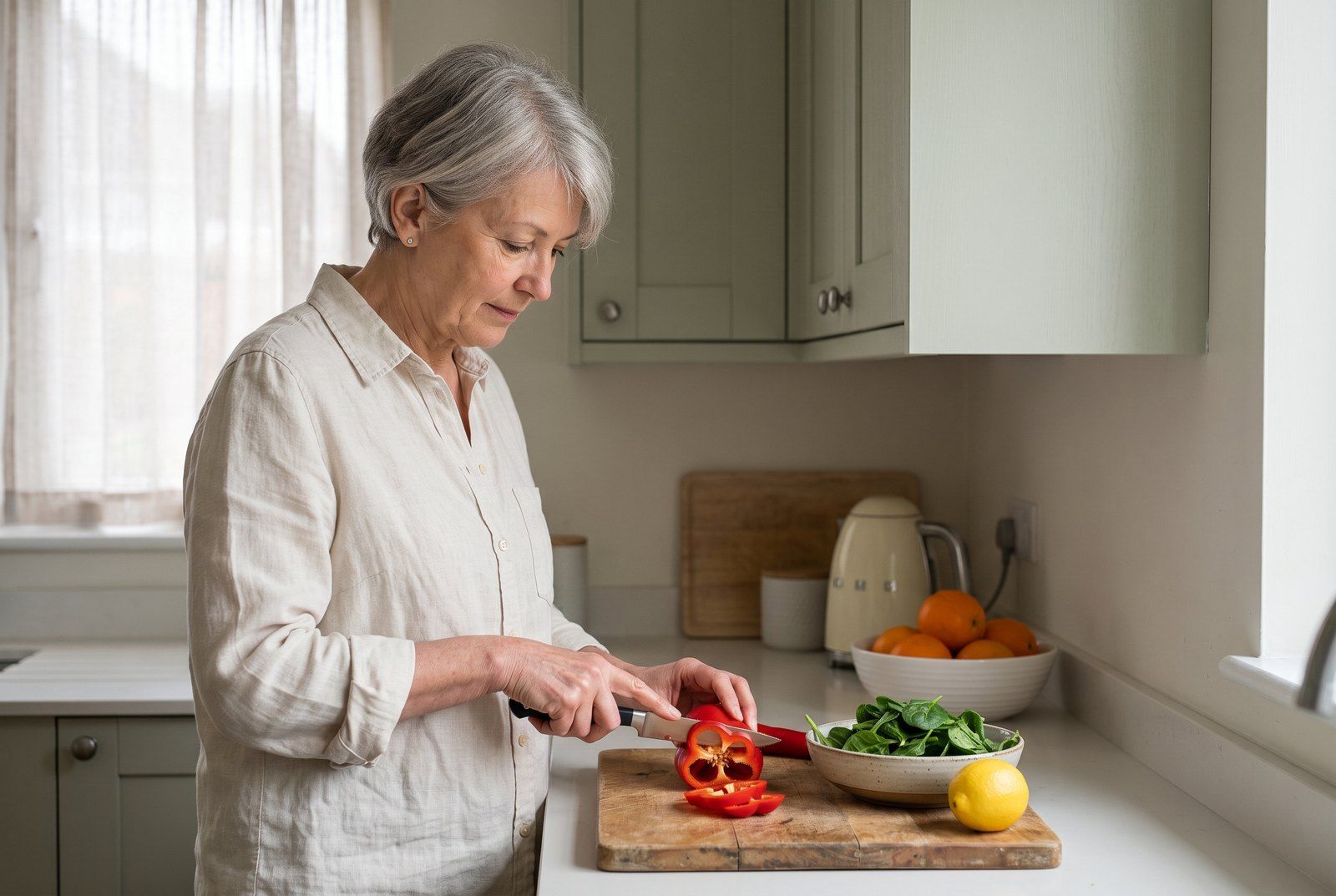
You can lower blood pressure naturally: eat well, cut salt, move more, lose extra weight. Good sleep and slow breathing help too. Each change brings a drop of its own, and they build on each other. High blood pressure starts at 130 mm Hg on top, or 80 on the bottom¹. That line is the same at every age². If you take a blood pressure medicine, never stop or change it because of a home reading³.
Can you lower blood pressure naturally without medication?
If a reading came back high, or your doctor said to keep an eye on it, take a breath. This is something you can act on.
High blood pressure means the push of blood against your artery walls stays too high. It is very common. Nearly half of US adults have it, 48.1%, or about 119.9 million people⁴.
Our guide to decoding your numbers explains what each reading means.
The guideline treats lifestyle change as a real treatment, with its own window before medication. That window applies if your reading is 130/80 or higher and your doctor judges your overall heart risk to be lower⁵. You then get 3 to 6 months to bring your reading down with lifestyle changes alone.
If your reading is still not below 130/80 after that window, medicine comes next⁵. If you already take blood pressure medicine, these changes work alongside it.
Each change is measured in mm Hg, the same way a pill is. The next section shows what each one is worth, so you can pick the two or three that fit your life.
How much can lifestyle changes lower your blood pressure?
Up to 11 mm Hg off your top number, for the strongest single change⁶. That change is a healthy eating pattern, DASH (Dietary Approaches to Stop Hypertension) or the Mediterranean diet. Every other change in the table below brings a measured drop of its own.
The table tracks the top number (systolic, the push of blood as your heart beats). Both numbers count, but past 50 the top number tells more about your risk of heart disease⁷. It usually rises with age as the large arteries stiffen and plaque builds up.
Here is what each change was worth in trials, with who was studied beside each figure.
**What each change lowers your top number by, in mm Hg.**⁶⁸⁹
| Change | What was measured | Drop in the top number (mm Hg) |
|---|---|---|
| DASH eating pattern | Adults on a healthy eating pattern, best case | up to 11 |
| DASH eating pattern | Adults with elevated to high blood pressure, against usual care | 6.97 |
| DASH eating pattern | Adults with and without high blood pressure, against a control diet | 3.2 |
| Strength training | People with elevated or high blood pressure | 8.2 |
| Strength training | Older adults | 6.11 |
| Meditation or prayer-based practice | People with high blood pressure | 7.63 |
| Potassium-enriched salt substitute | Adults using it instead of regular salt, three reviews | 4.61, 4.80, 5.75 |
| Beetroot juice | People with high blood pressure, against a placebo | 5.31 |
| Beetroot juice | All trials pooled | 3.55 |
| Omega-3 fats (EPA and DHA) | Trials giving an intake of 2 to 3 g a day | 2.61 |
| Omega-3 fats (EPA alone) | All trials pooled | 2.6 |
| Losing weight | Weight-loss trials, for every kilogram lost | 1.05 |
The top rows are worth the most, and any two or three can run side by side.
The bottom number falls too in the same trials, by a little less⁹¹⁰.
Losing weight is the row with the steadiest return. Its figure is per kilogram, about 1 mm Hg off the top number for each kilogram lost¹¹. Waist size matters too: men are at risk with a waist greater than 40 inches (102 centimeters), women greater than 35 inches (89 centimeters)¹².
Two honest caveats. These are trial averages, so your own drop will differ. And the drops stack only partly, so do not add every row together.
The table lists only the changes with a measured figure, so aerobic exercise, smoking, alcohol and sleep have sections of their own. Pick two or three from the top of the table that fit your life and start there.
How much salt is too much for your blood pressure?
No more than 2,300 milligrams (mg) of sodium a day, and ideally no more than 1,500 mg¹³. That lower figure is the American Heart Association's ideal daily limit for most adults, and especially for anyone with high blood pressure.
Sodium is the part of salt that moves your reading. Extra sodium holds extra water in your bloodstream, so your heart has more to push and your artery walls take more pressure. The link between the sodium you eat and your blood pressure runs close to a straight line, so more sodium means a higher reading¹⁴. The same line means any cut counts, even one that falls short of the ideal.
Cutting just 1,000 mg a day can improve blood pressure and heart health¹³. You do not need a new diet to get there. Start with these habits this week:
- Cook at home more often, so you decide how much salt goes in.
- Read the label in the grocery aisle and at the deli counter. Pick the low-sodium or no-salt-added version.
- Put the shaker away. Season with herbs, spices, garlic and citrus, or a salt-free seasoning blend.
- Rinse canned beans and vegetables before you use them.
- Look for two phrases on the package: "low sodium" and "no salt added".
One more swap belongs on the list: a potassium-enriched salt substitute in place of regular salt. If you have kidney disease, ask your doctor before you switch to a potassium-based substitute.
Pick one habit from the list and start it on your next grocery trip. The rest can follow once that one feels normal.
Which foods help bring your blood pressure down?
Vegetables first, and the potassium-rich ones most of all. Cutting sodium is one half of your job, and adding potassium is the other. The American Heart Association recommends 3,500 to 5,000 mg of potassium a day to prevent or treat high blood pressure¹⁵. Ideally, all of it comes from your food.
The DASH eating plan lists its vegetables as rich sources of potassium, magnesium and fiber¹⁶. The list includes:
- potatoes and sweet potatoes
- spinach, collards and kale
- tomatoes
- lima beans
- squash
Bananas, oranges, beans and yogurt round out your everyday potassium foods.
Magnesium rides along in those same vegetables, so you do not need to hunt for it¹⁶. Nuts, seeds and whole grains add more.
For calcium, look to fat-free or low-fat milk, yogurt and cheese. One DASH serving is 1 cup of milk or yogurt, or 1 1/2 oz of cheese¹⁷.
Fiber has a target of its own. The Dietary Guidelines say adults need 22 to 34 g of fiber a day, depending on your age and sex¹⁸.
The National Academy of Medicine breaks that down by age and sex. Women need 21 g a day over 50, and 25 g at 50 or younger¹⁹. Men need 30 g over 50, and 38 g at 50 or younger.
Oatmeal with nuts and berries gives you a fiber-friendly breakfast¹⁸. The fiber in oats is called beta-glucan. Beans, lentils, whole grains, and fruit and vegetables eaten with their skins do the rest.
You get omega-3 fats (a kind of fat found in oily fish, mainly EPA and DHA) from salmon, mackerel, sardines and tuna. Walnuts, flaxseed and chia seeds carry them too. In pooled trials, EPA lowered the top number²⁰.
You get nitrates (a natural compound in some vegetables) from beets, beetroot juice, spinach, arugula and other leafy greens. In trials of people with high blood pressure, beetroot juice lowered the top number against placebo²¹.
Put together, these are the food groups DASH is built from: vegetables, fruit, whole grains, low-fat dairy, fish, beans and nuts¹⁶¹⁷. Fill your plate from those groups and you are eating the DASH way.
Which foods should you limit, and how do you eat well on a budget?
Limit salty packaged foods, fatty meats and sugary extras, and build the rest of the plate from cheap staples that keep. Start with the salty packaged foods. Trade each for a plainer version:
- Deli and processed meats: chicken, fish or beans.
- Canned soups: a low-sodium can, or homemade.
- Salted snacks: unsalted nuts or plain popcorn.
- Boxed rice and pasta mixes: plain rice or pasta.
- Fast food: home cooking when you can.
- Pickles in brine, ketchup and bottled dressings: oil, vinegar and fresh herbs.
The DASH eating plan limits foods high in saturated fat²²²³. That means fatty meats, full-fat dairy and tropical oils such as coconut, palm kernel and palm oil. Reach for fish, poultry or beans in place of red meat.
Keep sweets and sugary drinks to an occasional treat.
You do not need fresh produce to eat well. Frozen and canned vegetables can still be a good choice²⁴. The key is that they were canned or frozen right after harvest, while they still had their nutrients.
Canned fruits and vegetables cost little and keep for a long time²⁵. Fill the cart with:
- Canned vegetables labeled no salt added or low sodium.
- Plain frozen vegetables, without sauce.
- Fruit canned in water or its own juice.
- Dried fruit with no added sugar.
- Dried beans and lentils.
- Powdered milk.
If money is tight, ask your state's benefits office whether SNAP can help with the grocery bill. The plate stays the same. Only the aisle changes.
How much exercise lowers blood pressure, and does strength training count?
Aim for at least 150 minutes a week of moderate aerobic activity, or 75 minutes of vigorous activity, or a mix of the two²⁶²⁷. Aerobic means anything that gets your heart beating faster. Spread it through the week rather than saving it for the weekend.
That is about half an hour of brisk walking on most days. Short walks through the day add up the same as one long one. Moderate means you can still talk but could not sing. Vigorous means you can only get out a few words at a time.
Any of these count:
- brisk walking
- cycling
- swimming
- dancing
- jogging
Strength training belongs in the plan too, on at least 2 days a week²⁷. Bodyweight moves, resistance bands or light dumbbells at home all count.
Strength training still works if you already take blood pressure medicine. In trials it lowered the top number by at least 2.8 mm Hg and the bottom number by at least 1.6 mm Hg²⁸.
Start where you are. If you have been inactive, build up over a few weeks rather than starting with a hard program.
Moving more and losing extra weight go together. Pick the activity you will actually do and count the minutes.
How do smoking and alcohol affect your blood pressure?
Nicotine makes your blood vessels constrict (tighten), so your heart has to work harder to push blood through them²⁹. That is why smoking, or using smokeless tobacco, raises your risk of high blood pressure. The nicotine is what does the harm, whichever product it comes from, vaping included.
Your body starts to recover as soon as you quit³⁰. Within 20 minutes of your last cigarette, your blood pressure and heart rate drop from the nicotine spike²⁹. After several days, the carbon monoxide in your blood returns to normal.
Steer clear of other people's smoke as well. Alcohol is the other habit worth a look.
If you choose to drink, the limit that counts is no more than two drinks a day for men and one a day for women³¹. Drinking more than that can raise your blood pressure³². Alcohol can also get in the way of blood pressure medicines, so they do not work as well.
That limit is set in standard drinks, so a large glass of wine or a strong beer can count as more than one³¹. Drinks high in caffeine can cause a spike in blood pressure for some people, too³².
With alcohol, the rule is simple. The less you drink, the better³¹. Pick the number you can hold to, and hold to it.
How do sleep and stress change your blood pressure?
Sleep protects the heart and blood vessels your blood pressure depends on, and slow breathing lowers the numbers themselves. A good night's sleep every night is vital to cardiovascular health. Your sleep target is an average of 7 to 9 hours a night³³. Too little or too much sleep is linked with heart disease.
A few habits make those hours easier to reach:
- Go to bed and get up at the same time every day, weekends included.
- Keep your bedroom cool, dark and quiet.
- Put screens away in the hour before bed.
- Skip large meals, caffeine, nicotine and alcohol close to bedtime.
- Keep naps short and early in the day.
For stress, one practice has a clear result. In trials, slow breathing lowered the top number by 5.62 mm Hg and the bottom number by 2.97 mm Hg³⁴. The method is simple: sit down and breathe slowly and evenly for a few minutes, once a day.
A phone app or a simple count can set the pace if it helps. Meditation or prayer-based practice, done quietly each day, lowered the top number in trials of people with high blood pressure³⁵. Time with friends and family eases long-term stress, and a support group can too.
Pick one thing for tonight: a set bedtime, or a few slow breaths.
How do you know your plan to lower blood pressure naturally is working?
You know by tracking your readings at home over weeks, not by any single number. Your blood pressure rises and falls all day long, so one reading is never a verdict. The pattern across days is what shows whether your changes are working.
Take each reading the same way. Sit in a comfortable chair with your back supported and your feet flat on the floor³⁶. Sit still for 3 to 5 minutes without talking or moving before the first reading³⁷.
A home blood pressure monitor does the rest. Take your readings in pairs, morning and evening. The pattern across a week of paired morning and evening readings matters more than any single reading.
If you take blood pressure medicine, take the morning readings before the morning dose and the evening readings before bed³⁸. The timing is part of the method.
Never stop or change a blood pressure medicine because of a home reading³. That decision belongs with the doctor who prescribed it.
One reading needs action right away. If your top number is higher than 180 and/or your bottom number is higher than 120, wait one minute and take it again³⁹. If the second reading is just as high, this needs urgent medical attention.
So here is your week. Take one reading in the morning and one before bed, and pick one change from the table earlier in this article. That is all it takes to see, in your own numbers, whether the plan is working.
Frequently asked questions
How long does it take to lower blood pressure naturally?
Weeks for the first shift, and a few months for the full effect as each change settles in. Judge progress by a weekly average of home readings, because one reading only shows that moment. Set that average against the standard categories to see where you stand¹. Give each change a few months before you judge it, and keep the log going the whole time.
Can high blood pressure be reversed?
Yes, in the way that counts: your numbers can come down and stay down while the habits hold. There is no point at which the work is finished and the reading is fixed for good. Let the walking lapse or the salt creep back and the reading climbs again. What brought the numbers down is what keeps them down, so think of it as a practice you keep, not a cure you finish.
Does exercise lower blood pressure?
Yes, and it is one of the changes you can feel working. Aerobic activity, anything that gets your heart beating faster, lowers your resting pressure, and lifting weights adds to that. Brisk walking, cycling, swimming and yard work all count. Take your readings at rest, at the same times each day, so you compare like with like.
What foods lower blood pressure naturally?
Vegetables, fruit, beans, whole grains, nuts, fish and low-fat dairy, eaten as a pattern, not as single fixes. The potassium rich choices do the most work: leafy greens, sweet potatoes, bananas, beans and plain yogurt. Fresh herbs, garlic, lemon and vinegar give flavor back once the salt is gone. Cook from plain staples where you can, and read the sodium line on every label. Build the week's meals from those groups and the pattern does the work; a weekly average of home readings will show it.
Sources
- American Heart Association. 2024. Understanding Blood Pressure Readings.. heart.org
- American Heart Association / American College of Cardiology. 2025. 2025 AHA/ACC Guideline for the Prevention, Detection, Evaluation and Management of High Blood Pressure in Adults.. pubmed.ncbi.nlm.nih.gov
- American Heart Association. 2025. Monitoring Your Blood Pressure at Home.. heart.org
- CDC. 2024. High Blood Pressure Facts.. cdc.gov
- American College of Cardiology. 2025. New in Clinical Guidance | High Blood Pressure Focus of New ACC/AHA Guideline.. acc.org
- Mayo Clinic. 10 medicine-free ways to manage high blood pressure.. mayoclinic.org
- American Heart Association. 2024. Understanding Blood Pressure Readings.. heart.org
- Journal of the American Heart Association. 2020. Nonpharmacologic Interventions for Reducing Blood Pressure in Adults With Prehypertension to Established Hypertension.. pubmed.ncbi.nlm.nih.gov
- Advances in Nutrition. 2020. Dietary Approaches to Stop Hypertension (DASH) Diet and Blood Pressure Reduction in Adults with and without Hypertension: A Systematic Review and Meta-Analysis of Randomized Controlled Trials.. pubmed.ncbi.nlm.nih.gov
- Heart (British Cardiac Society). 2022. Effects of salt substitutes on clinical outcomes: a systematic review and meta-analysis.. pubmed.ncbi.nlm.nih.gov
- Hypertension (American Heart Association journal), via PubMed. Influence of weight reduction on blood pressure: a meta-analysis of randomized controlled trials.. pubmed.ncbi.nlm.nih.gov
- Mayo Clinic. 2024. 10 medicine-free ways to manage high blood pressure.. mayoclinic.org
- American Heart Association. 2024. Shaking the Salt Habit to Lower High Blood Pressure.. heart.org
- Current Opinion in Cardiology. 2022. New wrinkles in hypertension management 2022.. pubmed.ncbi.nlm.nih.gov
- American Heart Association. 2024. How Potassium Can Help Prevent or Treat High Blood Pressure.. heart.org
- National Heart, Lung, and Blood Institute (NHLBI), NIH. 2026. Following the DASH Eating Plan.. nhlbi.nih.gov
- National Heart, Lung, and Blood Institute (NHLBI), NIH. 2026. Following the DASH Eating Plan.. nhlbi.nih.gov
- Centers for Disease Control and Prevention (CDC). Fiber: The Carb That Helps You Manage Diabetes.. cdc.gov
- Mayo Clinic. Dietary fiber: Essential for a healthy diet.. mayoclinic.org
- Critical Reviews in Food Science and Nutrition. 2019. Effects of EPA and DHA on blood pressure and inflammatory factors: a meta-analysis of randomized controlled trials.. pubmed.ncbi.nlm.nih.gov
- Nutrition, Metabolism and Cardiovascular Diseases. 2024. Effects of beetroot juice on blood pressure in hypertension according to European Society of Hypertension Guidelines: A systematic review and meta-analysis.. pubmed.ncbi.nlm.nih.gov
- National Heart, Lung, and Blood Institute (NHLBI), NIH. 2026. DASH Eating Plan.. nhlbi.nih.gov
- MedlinePlus, National Library of Medicine (NIH). 2025. DASH Eating Plan.. medlineplus.gov
- MedlinePlus Medical Encyclopedia, National Library of Medicine (NIH). 2025. Foods - fresh vs. frozen or canned.. medlineplus.gov
- American Heart Association. Fresh, Frozen or Canned Fruit and Vegetables: All Can Be Healthy Choices.. heart.org
- American Heart Association. American Heart Association Recommendations for Physical Activity in Adults and Kids.. heart.org
- Centers for Disease Control and Prevention (CDC). Adult Activity: An Overview.. cdc.gov
- Clinical and Experimental Hypertension. 2021. Resistance training to reduce resting blood pressure and increase muscle strength in users and non-users of anti-hypertensive medication: A meta-analysis.. pubmed.ncbi.nlm.nih.gov
- University of Utah Health. 2024. How To Lower Blood Pressure.. healthcare.utah.edu
- American Heart Association. 2024. The Benefits of Quitting Smoking Now.. heart.org
- American Heart Association. 2024. Limiting or Avoiding Alcohol to Manage High Blood Pressure.. heart.org
- University of Utah Health. 2024. How To Lower Blood Pressure.. healthcare.utah.edu
- American Heart Association. 2024. Sleep.. heart.org
- Complementary Therapies in Medicine. 2019. Device and non-device-guided slow breathing to reduce blood pressure: A systematic review and meta-analysis.. pubmed.ncbi.nlm.nih.gov
- Journal of Religion and Health. 2024. Spiritually Based Interventions for High Blood Pressure: A Systematic Review and Meta-analysis.. pubmed.ncbi.nlm.nih.gov
- CDC. 2024. Measuring Your Blood Pressure.. cdc.gov
- American Heart Association. 2019. Measurement of Blood Pressure in Humans: A Scientific Statement From the American Heart Association.. pmc.ncbi.nlm.nih.gov
- American Heart Association. 2019. Measurement of Blood Pressure in Humans: A Scientific Statement From the American Heart Association.. pmc.ncbi.nlm.nih.gov
- American Heart Association. 2024. Understanding Blood Pressure Readings.. heart.org
This article is for information and education. It is not medical advice and does not replace the guidance of a qualified healthcare professional.